
Data Visualization Series (Part 4: Process & Change)
Showing Process and Change: How Timelines & Flowcharts Communicate Data
-
Illustration
-
Custom Graphics
-
Legal
-
Insight
- +2

Communicating the period of time surrounding an incident (or multiple incidents) is often as important as the incident itself: showing how an undesirable outcome could have been prevented; highlighting decisions made at critical times; and illustrating how delays and missed opportunities determine how an outcome could have been significantly different. In part 4 of our Data Visualization Series we address how Process & Change visuals are powerful in telling your client’s story.
Information retention is 6x better when visuals are used to convey your message
Applying your case data into a visual form is vital in simplifying the complex information of your case. Visuals have been proven to boost comprehension by 400%, and information retention is 6x better when visuals are used to convey your message.
Timelines & flowcharts can show events in the order in which they occurred, as well as the progression or change over the course of time. If you haven’t read the other posts in our Data Visualization series, read our introduction post about Informational data, part 2 which spotlights Comparing & Contrasting data, and part 3 for Organizing data.
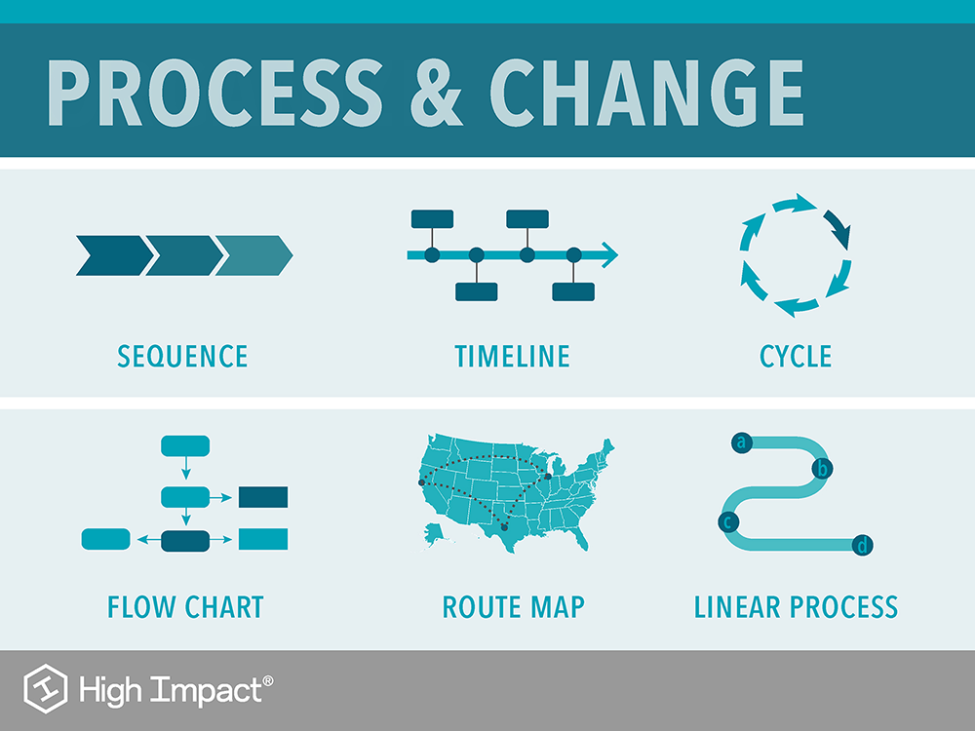
Data Option #4: Process & Change
When you want to highlight the cause and effect of a relationship between people or circumstances or illustrate standard of care protocols and the result of disruptions in those procedures, PROCESS & CHANGE graphics are an effective visual strategy we can apply to communicate your case clearly and effectively. We use these designs to help enhance the ability of your audience to see relationships, and consequences of key events that happened over time.
These are the questions to ask yourself before we begin collaborating on a design process that includes graphics that communicate Process & Change in a visual form:
- Where in the process did the incident or problem occur?
- Who was involved, and when?
- Where did the incident occur?
- How does the end result relate to prior incidents or actions?
- Could appropriate or timely action have changed the outcome?
Our team will collaborate with you to design a cohesive visual graphic that effectively showcases and highlights the story in a way that’s simple and easy for your audience to understand.
Using Directional Flow / Sequence Graphics
We apply this type of graphic design to show a series of events, or the cause and effect, leading to a predictable outcome. This visual can show the flow of steps, and also include the actions or events necessary to obtain a particular outcome. In the example below, we show a sequence of events indicating how abnormal physical and physiologic conditions lead to a predictable negative outcome if preventative measures are not taken, or if proper standard of care interventions are ignored.
The second example below shows the series of steps within a treatment plan that are available following a spinal cord injury. The graphic shows the progression from milder, less invasive options to more in-depth invasive treatments or surgical procedures when the first options are ineffective.
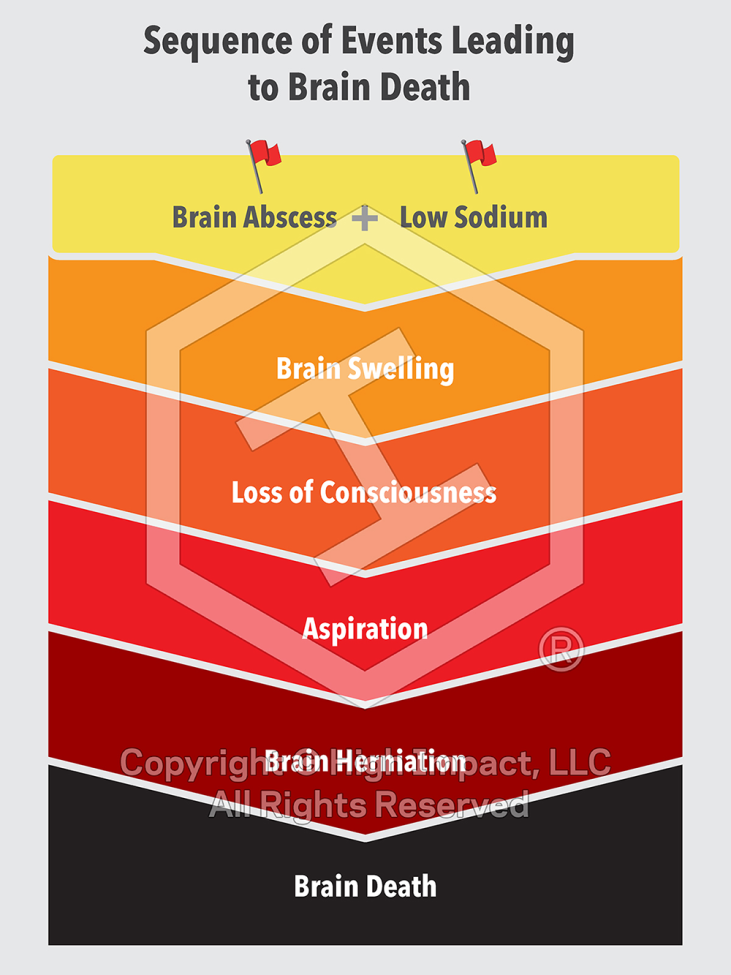
Example of Directional Flow / Sequence Graphic
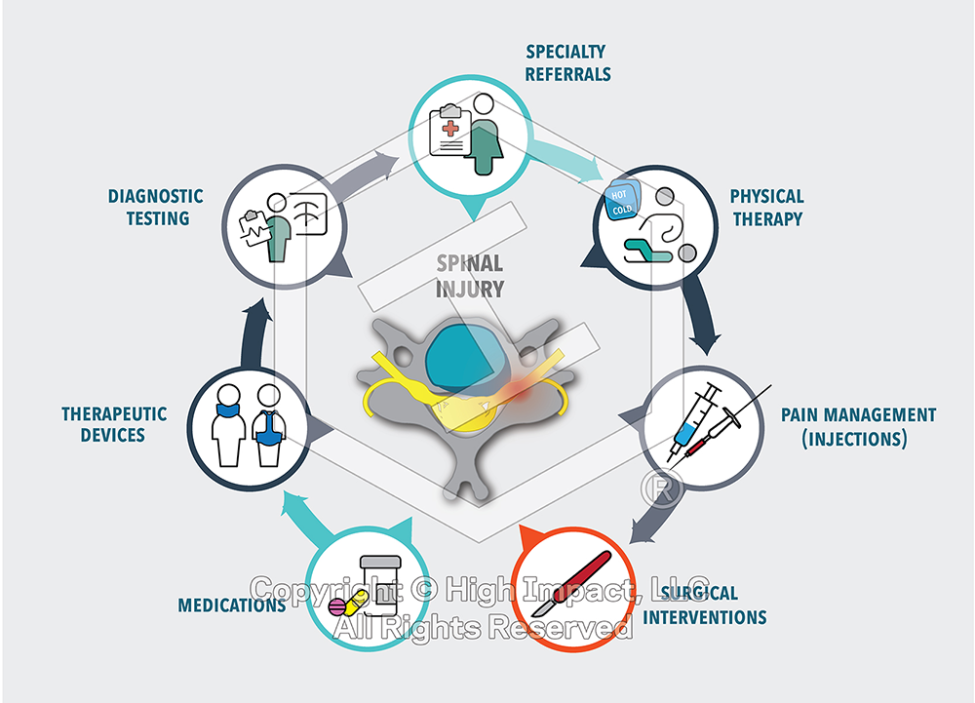
Additional Example of Directional Flow / Sequence Graphic
Using Timeline Graphics
In our 20+ years of experience, timelines are the most useful way in communicating the big picture or overview of a story. A timeline will help to illustrate a series of actions or events over time, however they also show much more. This visual helps us to define the who, what, where, when, and why circumstances occurred. They can include specific dated entries, help to identify missed opportunities or delays, and highlight red flags in treatment or care - ultimately leading to the outcome under scrutiny.
In the timeline example below, we clearly show missed opportunities to identify and treat a known stroke risk.

Timeline Graphic Example
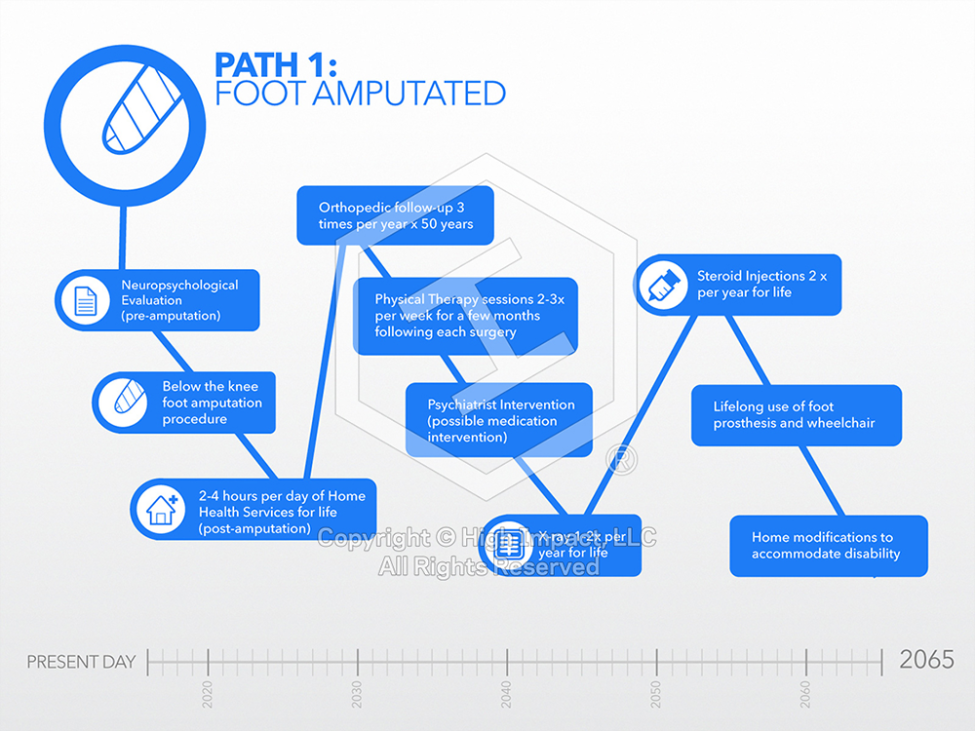
Additional Timeline Graphic Example
Using Cycle Diagrams
We would create this type of diagram for your case visual in order to show how a series of events interact repeatedly through a cycle. Normally this visual refers to a repetitive flow of actions or steps that doesn’t have a specific start or identifiable end.
In this first example below, we have illustrated the endocrinological feedback loops between the brain and the testes.
In the second example below, this cycle diagram effectively displays how an ongoing illicit relationship between two or more entities were benefiting from a cycle of illegal referrals and unnecessary surgeries.

Example of a Cycle Diagram
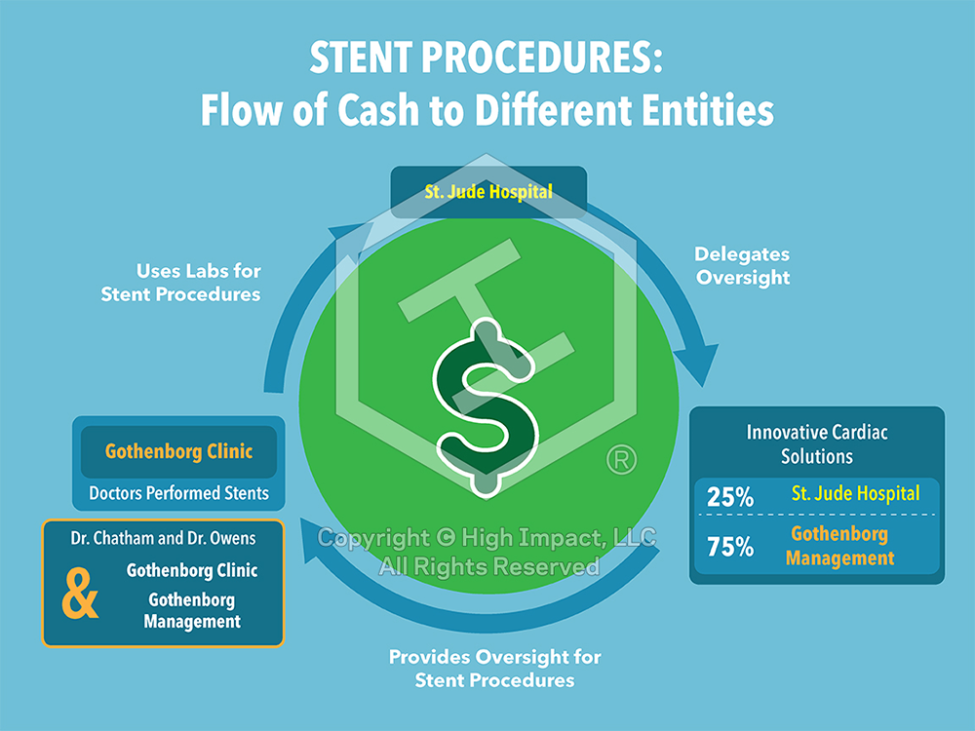
Additional Example of a Cycle Diagram
Using Flowcharts
We can partner with you to develop a flowchart visual for showing the workflow or process of occurrences within your case. Flowcharts are diverse, therefore they can also be used as a diagrammatic representation of an official procedure and/or a step-by-step approach to completing a task. In this way, a flowchart highlights the steps in a process that were missed or ignored.
In the flowchart example below, we apply the data to a clear chart showing the proper decision-making process for pre-anesthesia. This sends a powerful message when circumstances did not occur in the way that they should have, as the results are definitively clear.
In the second flowchart example below, we show the path of decision-making. It clearly illustrates how there were multiple chances along the way in which intervention could have prevented the man’s death in this case.

Flowchart Example

Additional Flowchart Example
Using Maps
A unique type of Process and Change graphics, maps are powerful visual indicators of location and change over time. They aid in the bird’s eye view of the location of an incident, a path traveled, and who else in that region that may have been affected by certain choices or actions.
The map example below details the circumstances surrounding safety protocols and responsibilities afforded to semi drivers. Tractor-trailer drivers are required to be thoroughly trained, qualified, and supervised. In this instance an unsupervised, untrained, and unqualified driver chose to take a restricted route that endangered the lives of others on the road. The map clearly indicates the route that should have been taken compared to the restricted route chosen. Proper training and supervision would have educated the driver on appropriate routes, reduced risk of injury, and prevented the unfortunate incident from occurring.
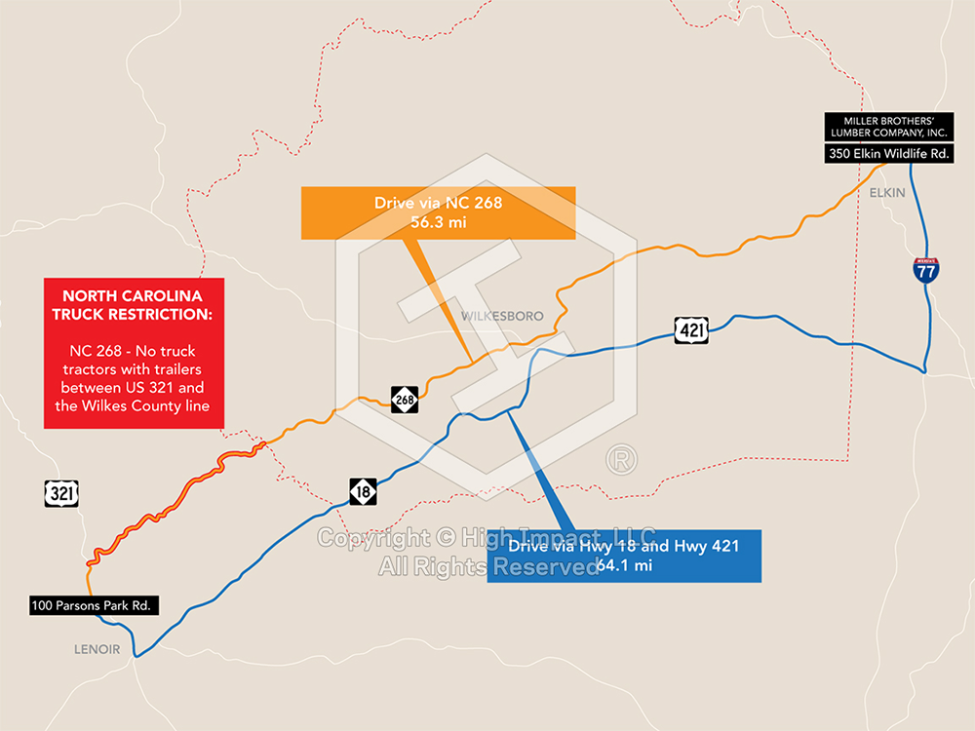
Example of a Map
Using Series Diagrams
Similar to a flow chart, we apply a series diagram in order to illustrate a flow of predictable events or changes following a certain procedure or incident without the restrictions of time.
When an artery is compromised, as in the situation illustrated below, fluid builds up in the intra-abdominal compartment. Copious amounts of blood and fluid were administered to the patient despite not investigating the reason for volume loss. Organ-systems are affected by abdominal compartment syndrome in a sequential and predictable manner. Care providers missed key indicators of internal bleeding—despite a known risk of vessel rupture during stent procedures—and did not act to mitigate the rupture or apply life-saving decompressive laparotomy. The series diagram illustrates this in an easy-to-understand visual form.
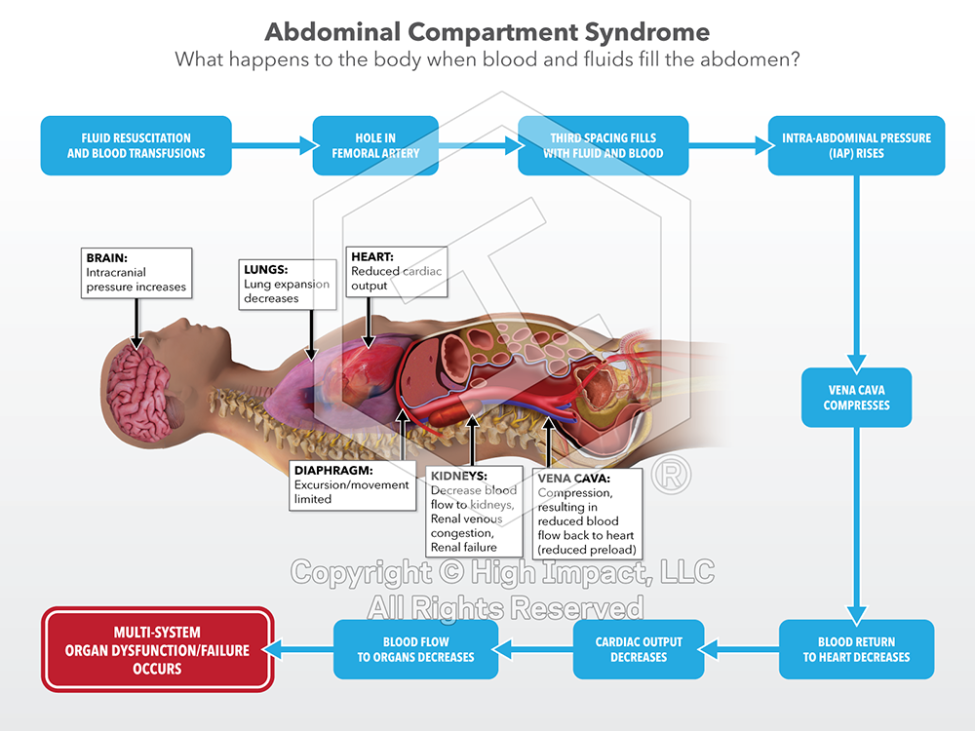
Example of a Series Diagram
Get in Touch
MediVisuals + High Impact’s team of visual strategists, artists and developers can build and customize your digital presentation for any case involving personal injury, medical malpractice, birth trauma - or any subject involving complex information.
Interested in working with us? Click here to get started. If you'd prefer, you can email us or call us at (800) 749 2184.
Work with us
Interested in working with us? To get started choose one of the options below.